A MiniDisc player case for the Sony MZ-R37.
The Sony MZ-R37 comes from the late nineties, and the people who still have a working one tend to keep it close. This MiniDisc player case has 10mm walls with a cushioning pattern built inside them, and a slot in the lid for the headphone cable, so the case closes with the music still playing.
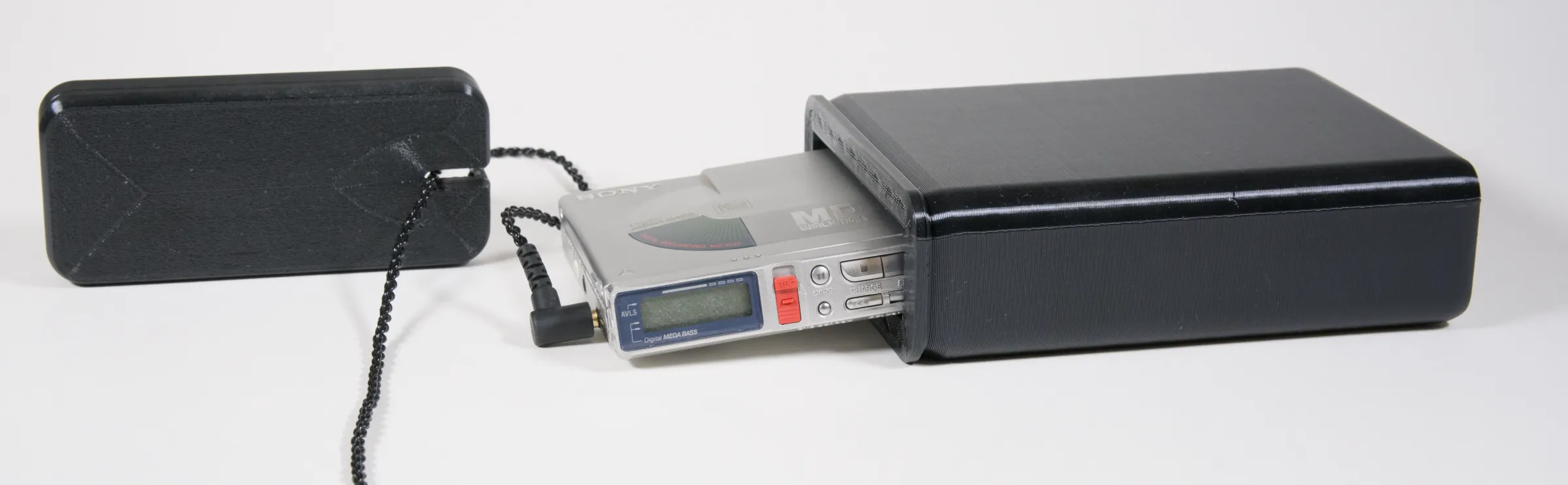
MiniDisc players, micro cassette recorders and the first pocket digital players from that era are still in circulation because their owners kept using them, moving them from a drawer to a desk to a jacket pocket and back. We sized this MiniDisc player case for that kind of carry, with a cavity shaped to your measurements and walls that can ride in a backpack, a tote or a carry-on.
Built around the player you measured
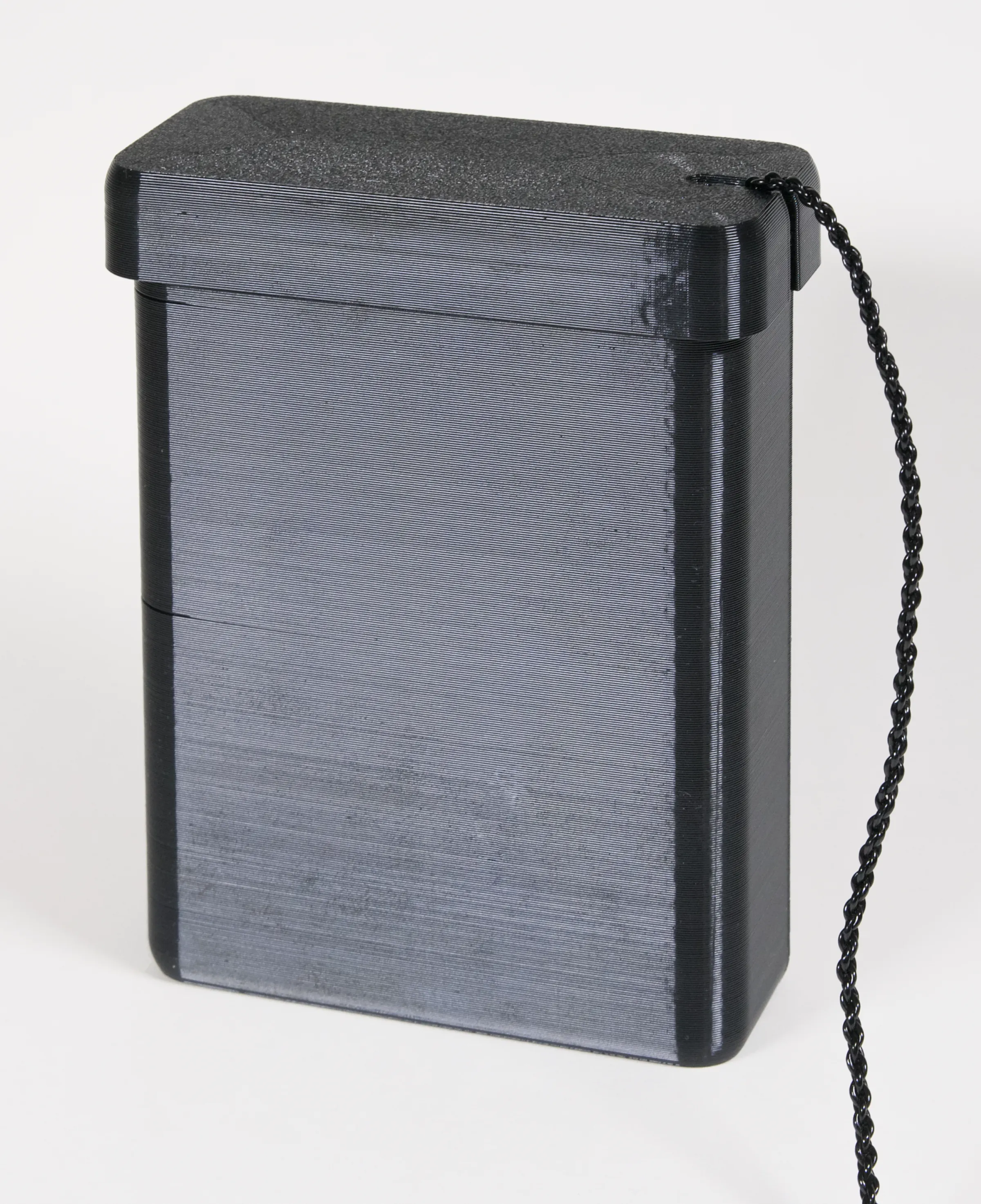
The case is made in two parts: a body shaped around the outline of your unit, and a lid that seats on a recessed lip at the top of the body. Each 10mm wall is a continuous outer skin with a cushioning pattern built inside it, and that pattern compresses under a knock and springs back, much as a running shoe's midsole does under a foot. We leave a little extra height in the cavity above the player so the headphone plug has room to sit inside with the lid closed.
Headphones stay plugged in
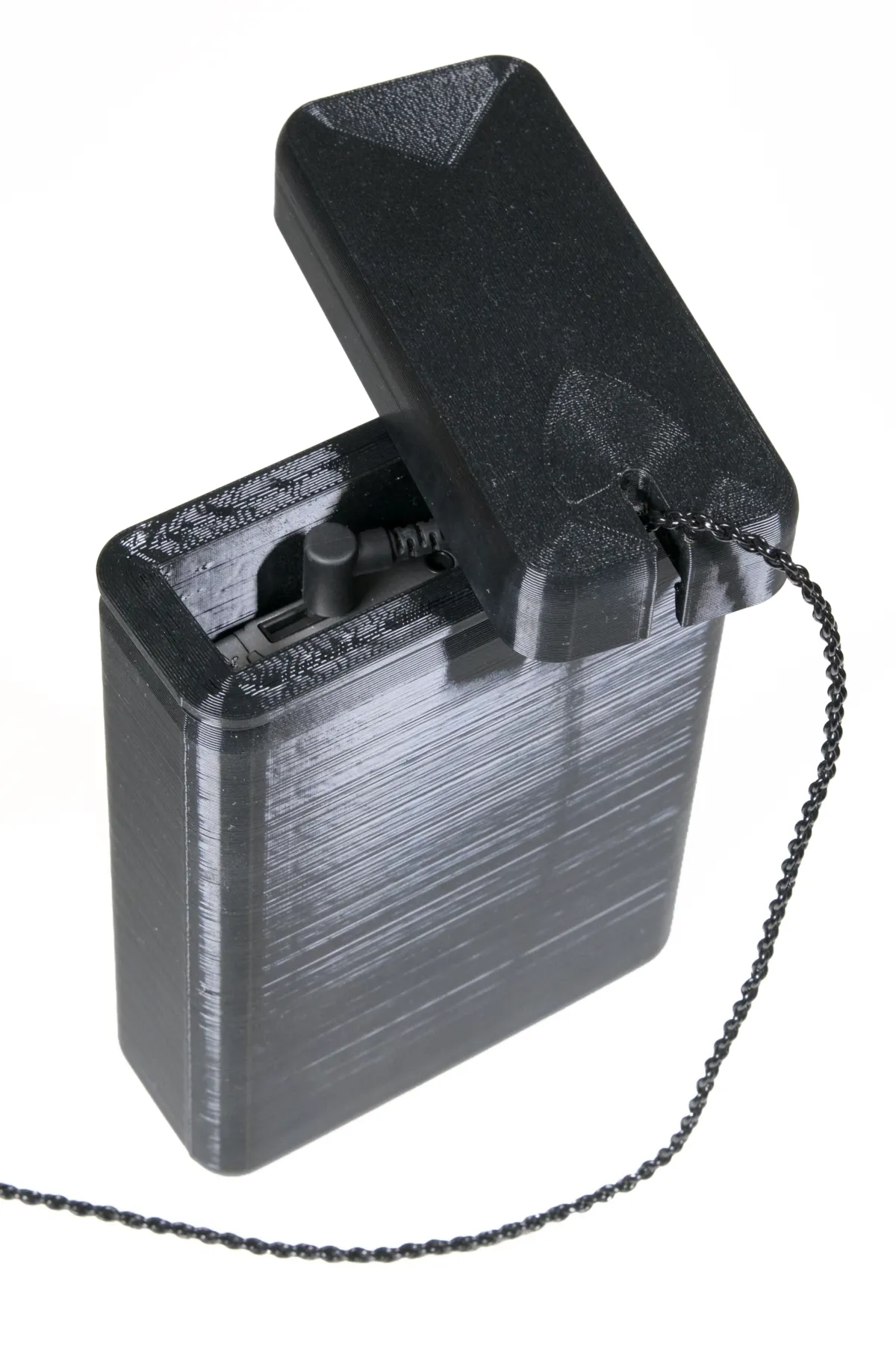
With the player seated, the headphone plug fits in the space above it and the lid closes flush over both. The cable leaves through a keyhole slot at the edge of the lid, sized to a single cable so it sits snugly once the lid is down. Putting the player away is one motion, lowering the lid while the music keeps playing, and taking it out again is the same motion in reverse.
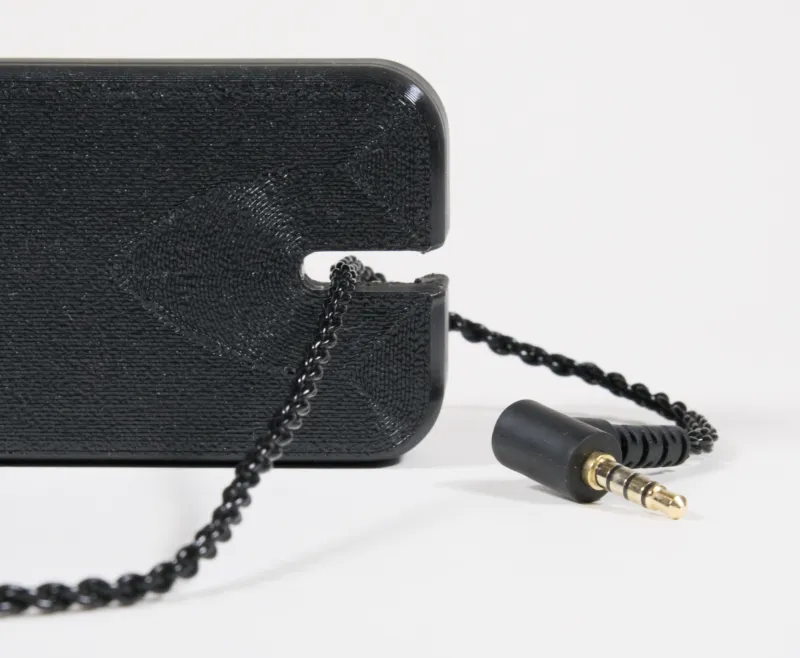
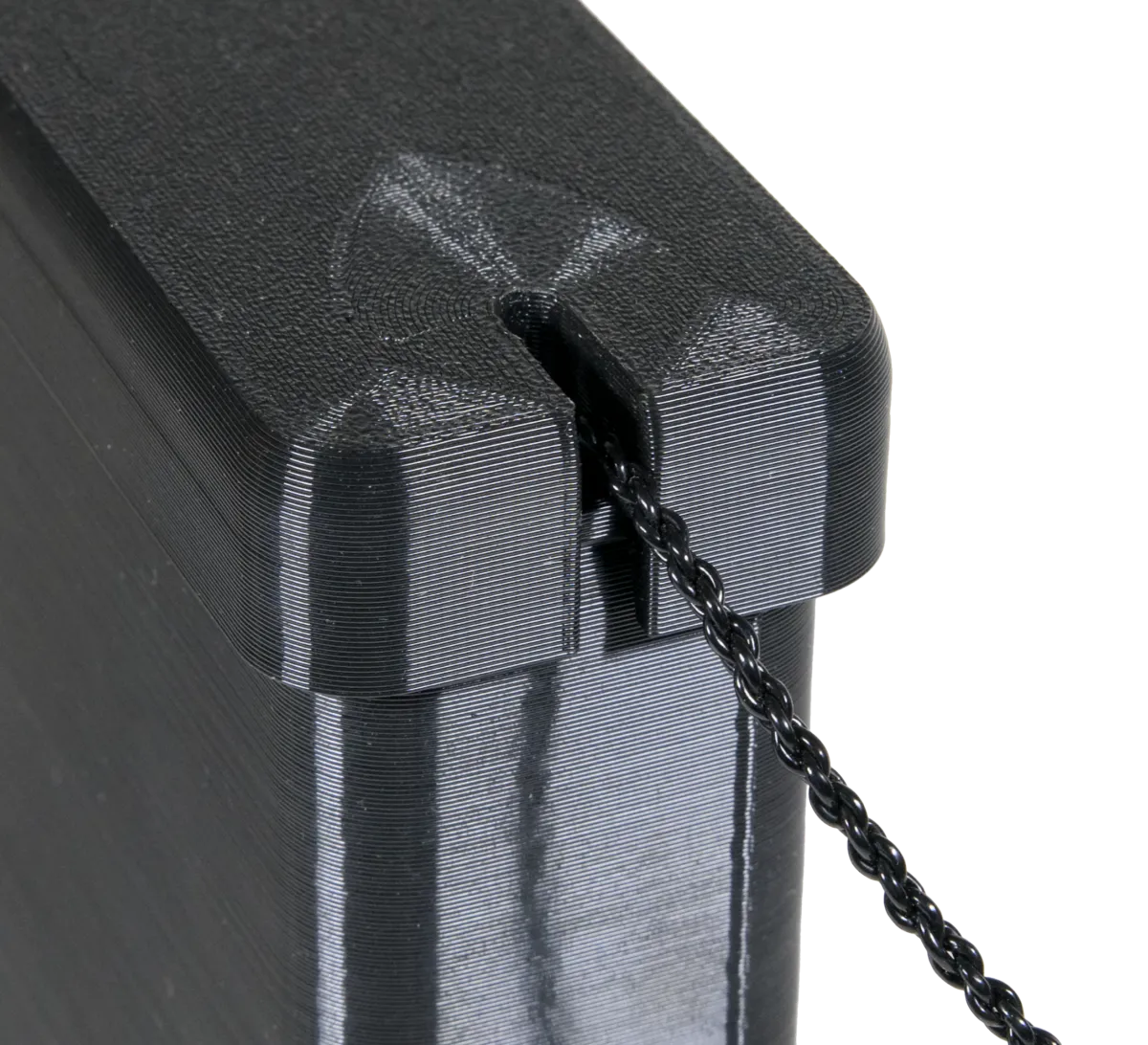
Sealed at the lid, cushioned through the walls
The walls do the work of a hard shell and a foam liner at once. The outer skin holds the shape of the case and takes the scrapes from zippers and keys, while the cushioning pattern behind it absorbs the energy of a knock or a drop before it reaches the player. The recessed lip that the lid drops onto forms a labyrinth seal, the same idea used on weather-sealed camera bodies, so dust has to work its way around a corner to get into the MiniDisc player case.
A recessed underside
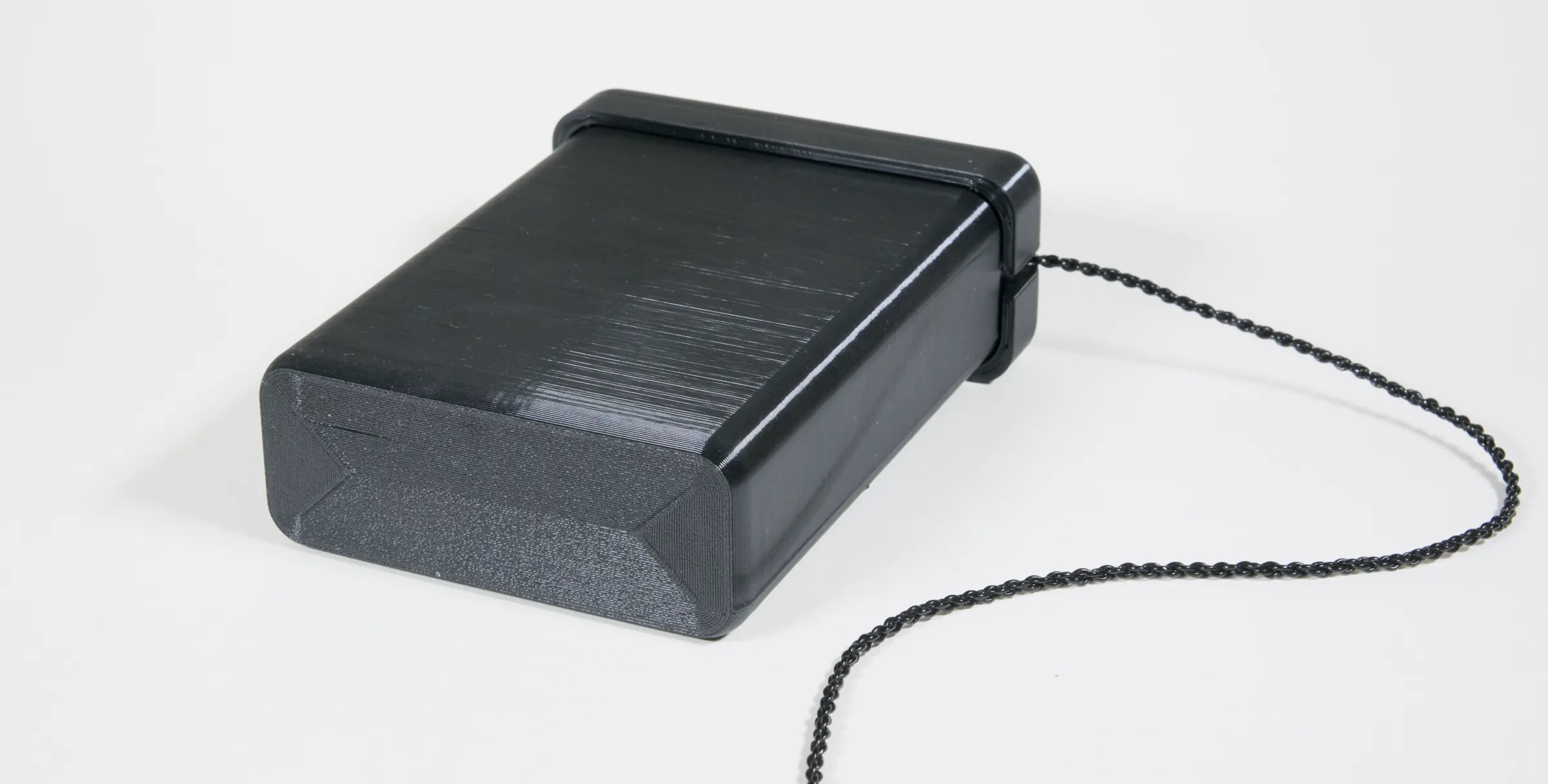
A recessed pocket on the underside lifts the player a few millimeters off the floor of the case, which gives the body room to flex under load while the player stays seated. The finished MiniDisc player case weighs about 190 grams, light enough to go back into the jacket pocket where a player like this has always ridden, now with its headphones plugged in and 10mm of wall around it.